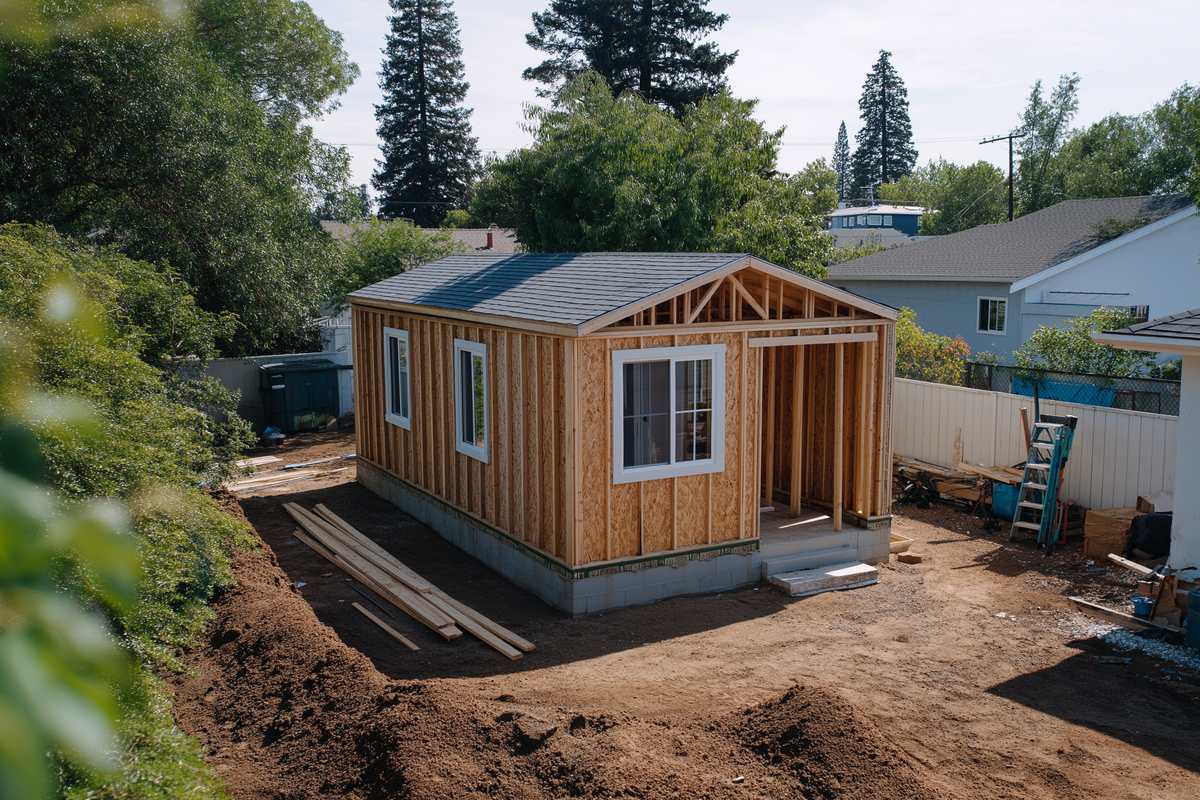
Many Seattle backyards sit behind a house with only a slim side yard, a fence and no alley. That layout raises a practical question before any digging starts. DADU construction access decides how people, machines and materials reach the build site, and it shapes the plan long before the first footing.
This guide explains how teams study access, which equipment questions come up, how deliveries and staging work and how a tight route affects labor. It does not assume any fixed cost, since every lot differs.
Why DADU Construction Access Comes First
A backyard cottage needs excavation, concrete, framing lumber, roofing and finish materials. Also, every one of those items has to travel from the street to the back of the lot. If the route is narrow, steep or blocked, the crew has to adapt its methods.
For that reason, access belongs in early planning, not in the week before work starts. Otherwise, a design that looks simple on paper can become harder to build if large equipment cannot reach the site. Our guide to DADU site work costs explains how site conditions feed into the budget.
Starting With an Access Survey
An access survey is a walk through the route with a tape measure and a camera. Then the team checks each pinch point between the street and the build area. Typical items include:
- Clear width. The narrowest gap between the house, fences, meters and downspouts.
- Overhead limits. Eaves, branches, wires and gutters that can block taller machines.
- Grade changes. Steps, slopes and retaining walls along the path.
- Ground surface. Lawn, pavers or soft soil that may need protection.
- Buried lines. Utility routes that heavy loads could damage.
Buried lines also deserve special care. Seattle Public Utilities recommends a free call before you dig so utilities can mark their lines. In addition, SPU notes that many buried lines on private property belong to the owner, and a private locating company has to find those.
Excavation Equipment and Tight Routes
Excavation equipment comes in many sizes. For instance, on a wide open lot a crew may choose a larger machine. On a tight lot, the crew may instead use compact equipment, smaller loads or more hand work.
Each choice carries tradeoffs. Smaller machines fit through narrow gaps, but they may move less soil per trip. As a result, the same excavation can take more trips or more labor hours. On sloped sites, access gets even harder, as our guide to the sloped lot DADU explains.
Sometimes a neighbor’s yard or a shared driveway offers a better route. However, crossing another property needs that owner’s permission, and any recorded easement terms still apply. Also, our guide to DADU easement restrictions covers how recorded rights can affect a project.
Delivery Logistics for DADU Construction Access
Deliveries bring their own puzzle. Concrete, lumber and drywall often arrive on large trucks that stay at the curb. From there, crews move materials by hand, cart or small machine.
Concrete, for example, shows the challenge well. If a truck cannot reach the forms, the crew may use a pump or move concrete in smaller loads. Similarly, a long lumber delivery may need careful sorting at the street so pieces travel in the right order.
Timing matters too. Deliveries that arrive before the crew can use them take up space and may sit in the weather. So many teams plan deliveries in phases that match the build sequence.
Staging Space and the Street
Staging means the place where materials, tools and debris containers sit during work. On a small lot, the backyard itself may have little spare room once the foundation goes in. Therefore, some projects stage part of the work in the street.
However, that step has rules. According to the Seattle Department of Transportation, staging construction materials or equipment in the public right of way calls for a right of way construction use permit. SDOT also notes that containers and dumpsters for construction projects need a different permit type than residential ones.
On site, rules apply as well. For demolition permits, SDCI’s Tip 337 calls for a first ground disturbance inspection before any ground disturbance, including construction access and staging areas. Erosion controls also need to go in before that ground work begins.
How Access Affects Labor
Tight access often shifts work from machines to people. For example, crews may carry materials, dig by hand near foundations or make extra trips with small loads. In turn, those changes can affect the schedule and the labor plan.
Still, difficult access does not automatically mean a specific cost increase. The result depends on the route, the design, the soil and the crew’s methods. Instead of assuming a number, ask for a site specific review that describes how the team plans to handle the route.
Protecting the Route and the Neighbors
The access path usually needs protection. Ground mats, plywood or gravel can reduce soil compaction and rutting. Meanwhile, fences, gates and landscaping may need temporary removal and later repair.
Neighbors also notice access work. Trucks, noise and parked equipment affect the street. A clear plan for deliveries and staging helps keep sidewalks open and reduces surprises.
Planning DADU Construction Access Early
Good planning starts with a few questions. Can a compact machine reach the build area? Where will deliveries land? Where will debris containers go, and does any of that require a street use permit?
When you answer those questions early, the design and the schedule can reflect real conditions. That approach also helps owners compare estimates on equal terms, since each bid should explain how the crew reaches the site. Our guide to the DADU contingency budget covers planning for site surprises.
Overall, DADU construction access is a planning topic, not just a work day detail. With measured routes, a staging plan and clear delivery timing, owners can understand how their lot affects the build.

 sacdigitalmedia