Some backyards stay soggy long after the rain stops. Water pools in low spots, runs off neighboring lots or seeps up through heavy soil. DADU site drainage shapes how crews prepare that ground, from the first grading to the last trench, and it often changes the order of work.
This guide covers surface drainage, grading, temporary erosion protection, existing drainage defects and how water affects excavation. It does not cover the design of permanent stormwater systems, which belongs in a separate stormwater discussion.
Why DADU Site Drainage Matters Early
Water changes soil behavior. Wet ground gets softer, harder to compact and easier to rut. As a result, a yard that seems firm in summer can act very differently during a Seattle winter.
Drainage also affects the building. Water that collects near footings can raise moisture under the floor and push on walls. So the site plan needs to show where water goes before, during and after construction.
Reading Surface Drainage Patterns
Surface drainage describes how rain moves across the ground. A quick look during or after a storm can reveal a lot. Common signs include:
- Pooling in low spots that stays for days.
- Runoff paths that carry water from a neighbor’s yard, a driveway or a roof.
- Soft or mossy ground that suggests poor drainage or high groundwater.
- Erosion marks such as small channels or exposed roots on a slope.
These signs point to questions, not answers. It also helps to note when the problem shows up, such as only in heavy storms or for weeks after rain. A designer, civil engineer or geotechnical engineer can then decide what the site actually needs. Our guide to DADU soil testing explains why soil conditions need testing rather than guessing.
Grading to Move Water Away
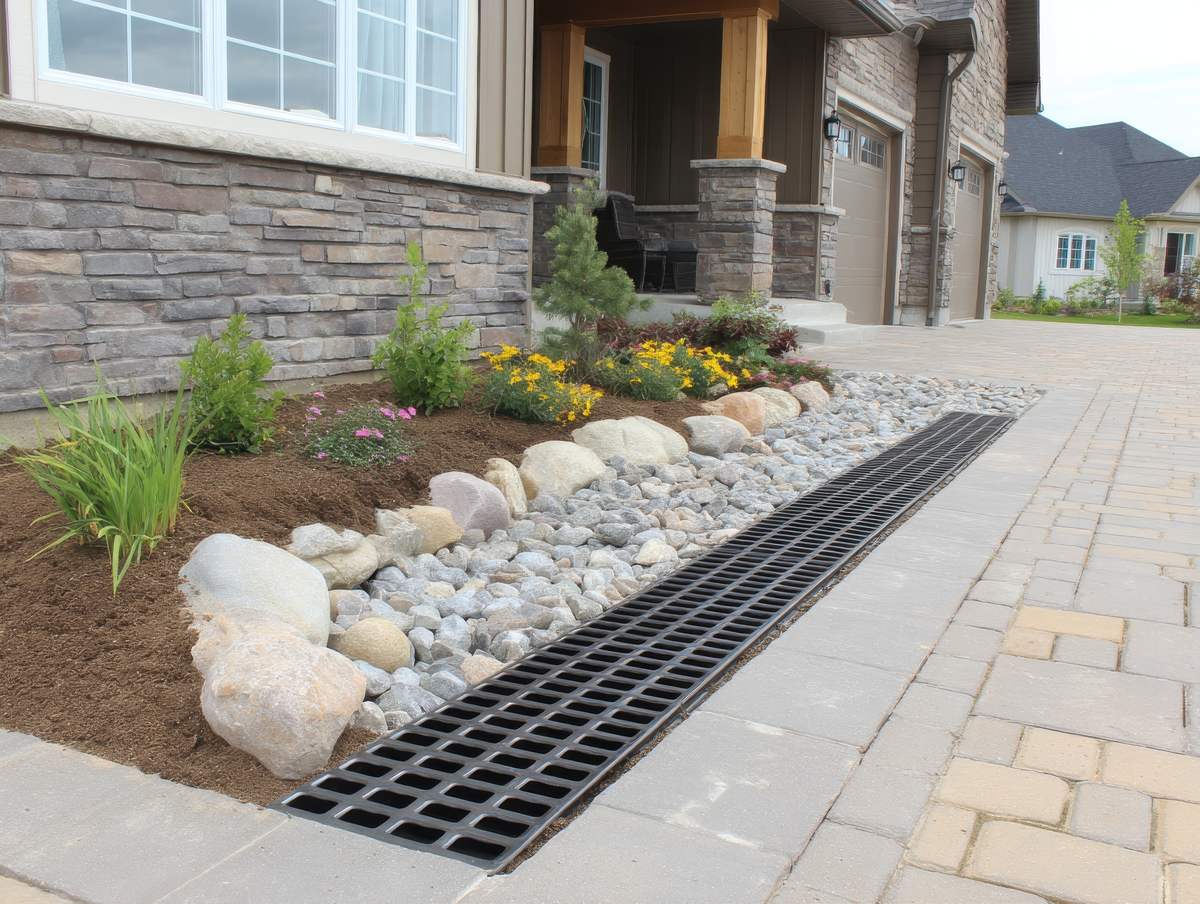
Grading shapes the ground so water flows away from structures and toward a safe outlet. For a cottage, that usually means sloping soil away from the foundation and avoiding low spots against walls. In addition, paths and patios should drain away from doors.
Grading can also redirect water toward a neighbor if done carelessly. Therefore, the plan should consider where runoff ends up, not just where it starts. On steep sites, grading and drainage tie closely to slope stability, as our guide to the sloped lot DADU explains.
Temporary Erosion Protection
Bare soil washes away easily during construction, especially on slopes and during long rainy periods. Erosion control keeps that sediment on site and out of drains and streets. Typical measures include silt fencing, mulch, covered stockpiles and stabilized entrances.
Seattle builds these steps into its review. According to SDCI’s Tip 303A, projects that disturb more than 750 square feet of ground or add or replace more than 750 square feet of hard surface must include a standard construction stormwater control and soil amendment plan. The SDCI stormwater code page offers a small project version of that plan for work under 5,000 square feet of new and replaced hard surface or land disturbance.
Timing matters too. SDCI’s Tip 337 notes, for demolition permits, that crews must install erosion control measures before any ground disturbing activities. Later, crews can stabilize the site with measures such as hydroseed, plantings or gravel.
Old Defects That Affect DADU Site Drainage
Older lots often hide drainage problems. Downspouts may drain into broken pipes, old drains may lead nowhere and footing drains may have clogged long ago. Meanwhile, a side sewer can carry both wastewater and drainage water on some properties.
Research helps here, and so does a camera inspection when an engineer or plumber recommends one. Seattle Public Utilities offers side sewer cards and maps that can show older records. SPU also notes that the property owner owns and maintains the entire side sewer up to the public main connection, so defects on private property are the owner’s responsibility.
How Water Affects Excavation
Excavation in wet ground brings its own challenges. Trenches can fill with water, side walls can slough and soft soil may need removal before footings go in. Consequently, the schedule and methods may shift during the wet season.
Pumping water out of an excavation can trigger extra rules. The SDCI stormwater page notes that projects discharging construction dewatering to a combined sewer may need a King County dewatering authorization. Our guide to DADU site work costs explains how site conditions affect planning.
Drainage Near Walls and Slopes
Walls and slopes need special attention on any wet site. Water behind a wall raises pressure, and water on a slope can weaken soil. That is why wall designs usually include drainage gravel and a drain pipe to an approved outlet.
SDCI also notes that connecting wall drainage to a side sewer requires a side sewer permit. Our guide to DADU retaining walls covers wall drainage in more detail.
Planning DADU Site Drainage Well
A good drainage plan starts with observation. Many owners already know where puddles form, which makes their notes useful to the team. Note where water collects, flows and enters the site, ideally during heavy rain. Then share those notes and any photos with the design team.
Next, ask how the plan handles temporary erosion control, existing defects and water in excavations. Also ask how DADU site drainage will tie into the permanent design, since the two need to work together. Overall, DADU site drainage connects nearly every step of site preparation. With early attention, owners can understand how water shapes their project and plan for it with confidence.

 sacdigitalmedia