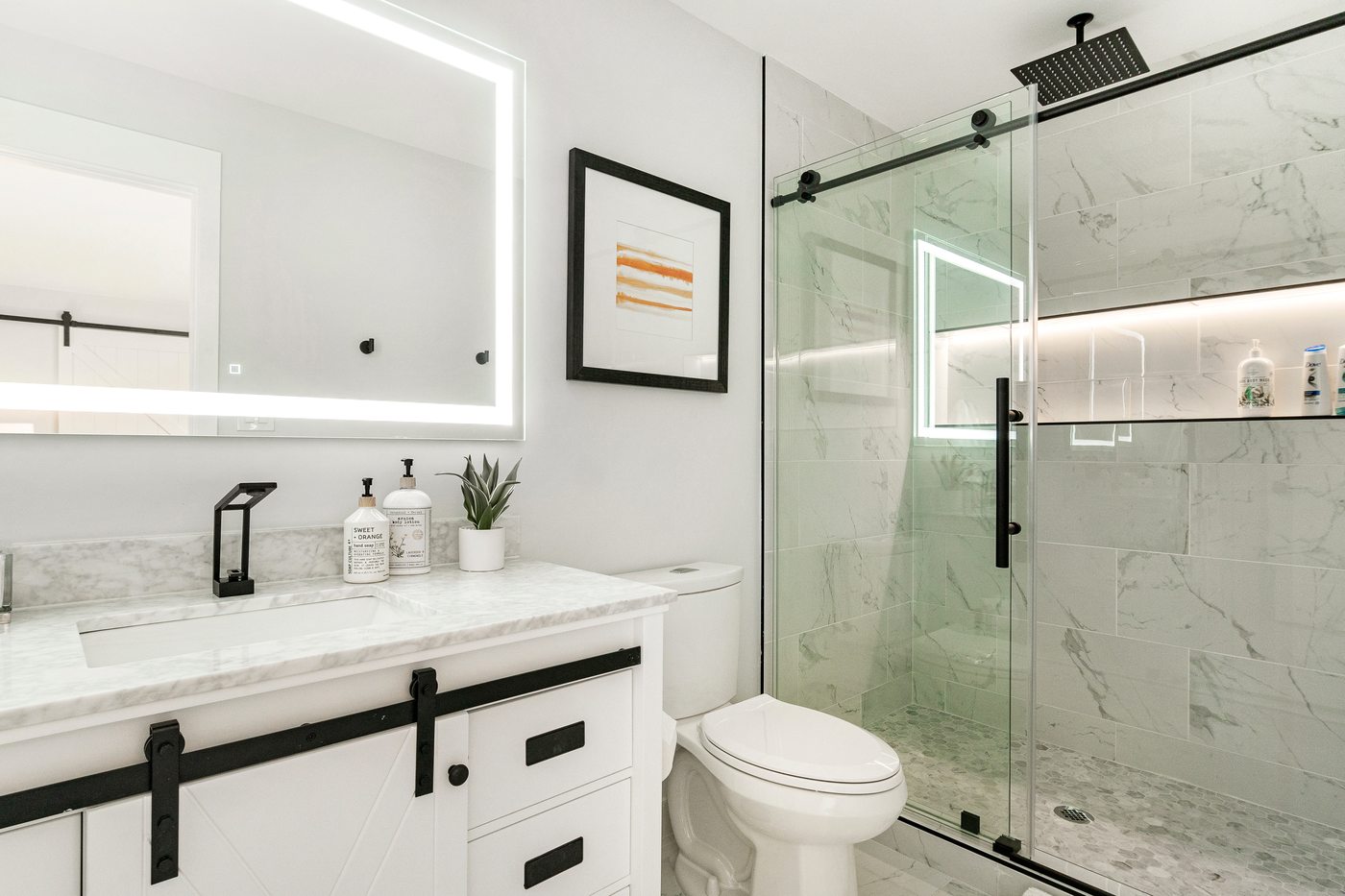
A backyard cottage packs a kitchen, bath and living space into a few hundred square feet. Every surface gets touched, wiped and walked on more often than in a larger house. Which finishes hold up? The ones that handle water, clean easily and can be repaired in place.
Choosing DADU interior materials means planning for heavy daily use in a small footprint. A DADU is a detached accessory dwelling unit, a separate home on the same lot as a house.
Details below reflect the Seattle Residential Code as posted by SDCI and checked in October 2026. Confirm with SDCI and your designer for your project.
Why Finishes Work Harder in a Small Home
In a compact plan, the same few feet of floor carry traffic from the door, the kitchen and the bath. Wear concentrates instead of spreading out. Spills and steam travel farther when rooms are close together.
A rented cottage sees move-ins, move-outs and cleaning between tenants. The post on durable choices for a rental DADU covers that angle in more depth.
Flooring That Handles Traffic and Water
Luxury vinyl plank resists water and is easy to replace by the board. Porcelain tile is very hard and suits entries and baths. Sealed concrete works well on a slab and pairs with radiant heat.
Engineered wood gives a warmer look but dents and reacts to standing water. Pick one floor for the whole cottage where you can, since fewer transitions mean fewer trip edges and seams.
Walls, Paint and Easy Cleaning
Paint sheen changes how walls clean. Eggshell and satin wipe down better than flat paint, and semi-gloss suits trim and doors. Keep leftover paint labeled for touch-ups, with the color name and sheen written on the lid.
Corners and door edges take the most bumps from bags, carts and furniture. Corner guards, solid trim and a durable wainscot in the entry can save repainting. Ask your painter about ventilation and drying time before move-in.
What Holds Up in a Small Kitchen?
Quartz and solid surface counters resist stains without sealing. Natural stone looks rich but may need periodic sealing. Laminate costs less and swaps out simply, though it scorches under hot pans.
Cabinet boxes take moisture near the sink and dishwasher. Ask about moisture-resistant boxes and durable door finishes. The post on DADU kitchen layouts covers how a small kitchen fits together.
Bathroom Finishes and the Code
Bathrooms mix water, steam and constant cleaning. Section R307.2 of the Seattle Residential Code covers this directly. Bathtub and shower floors, and walls above tubs with shower heads, must have a nonabsorbent surface.
Those shower wall surfaces must reach at least 6 feet above the floor. Tile, solid surface panels and some sheet products can meet this when installed to the maker’s instructions. A tile wall needs a waterproof backer behind it, not just grout.
Lighting and Color on Finishes
Light changes how a finish looks and how fast it shows wear. Dark floors show dust and pet hair. White counters show coffee rings. Mid-tone colors with some pattern hide daily marks well in a busy space.
Look at samples under the actual bulbs you plan to use. Warm light and cool light change the same tile a great deal. View each sample at night and on a cloudy morning, the two times the cottage will be used most.
Storage That Protects Finishes
Clutter wears finishes faster. Shoes on the floor scuff walls, and wet coats drip on flooring. A bench, hooks and a boot tray at the door protect the entry.
Built-in storage keeps furniture from rubbing walls in tight rooms. The post on DADU storage planning has more ideas.
Repairs and Replacement Over Time
Any surface will need repair at some point. Materials you can fix in sections save money and time. Plank flooring, paint and modular tile can be patched without tearing out a room.
Keep spare flooring, tile and cabinet fronts from the original order. Matching a color years later can be hard. Store the spares in a dry spot with room names on each box.
Indoor Air and New Finishes
New paint, flooring and adhesives can give off odors for a while after install. Ask suppliers about lower-emission products, and follow label directions for use and ventilation. Plan a few days of fresh air before anyone moves in. Ask for product data sheets, and keep them with your home records.
Run bath fans and the kitchen hood during and after finish work. Open windows when weather allows, even for an hour a day.
A Hypothetical Roosevelt Cottage
Here is an invented example. A Roosevelt owner plans to rent her cottage for several years and then house her daughter. She picks vinyl plank throughout, quartz counters and porcelain tile in the shower to 7 feet.
Her builder sets aside two boxes of spare flooring and a gallon of each paint. Nothing here describes a real project.
Common Surprises
- Engineered wood that cups near the entry door
- Flat paint that marks with every wipe
- Shower tile that stops short of the 6 foot line
- Discontinued flooring with no spares on hand
- Laminate counters scorched by hot pans
Interior Finishes FAQ
How high must shower wall tile go?
Six feet or more. The code calls for a nonabsorbent finish on shower walls and on tub walls with shower heads up to that line.
Which DADU interior materials suit a rental?
Water-resistant, repairable ones. Vinyl plank, quartz counters, satin paint and porcelain tile are common picks for tenant use.
Should I keep spare materials?
Yes. Products change and colors fade, so spare flooring, tile and paint make future repairs blend in.
Finish Planning Checklist
- Map high-traffic and wet areas on the plan.
- Limit flooring changes between rooms.
- Confirm shower surfaces reach 6 feet.
- Pick washable paint sheens.
- Order spares and label them by room.
Choose finishes you can clean and repair in sections, and confirm wet area surfaces meet R307.2. More posts sit in the design, materials and sustainability section.

 DaduSeattleWA.com