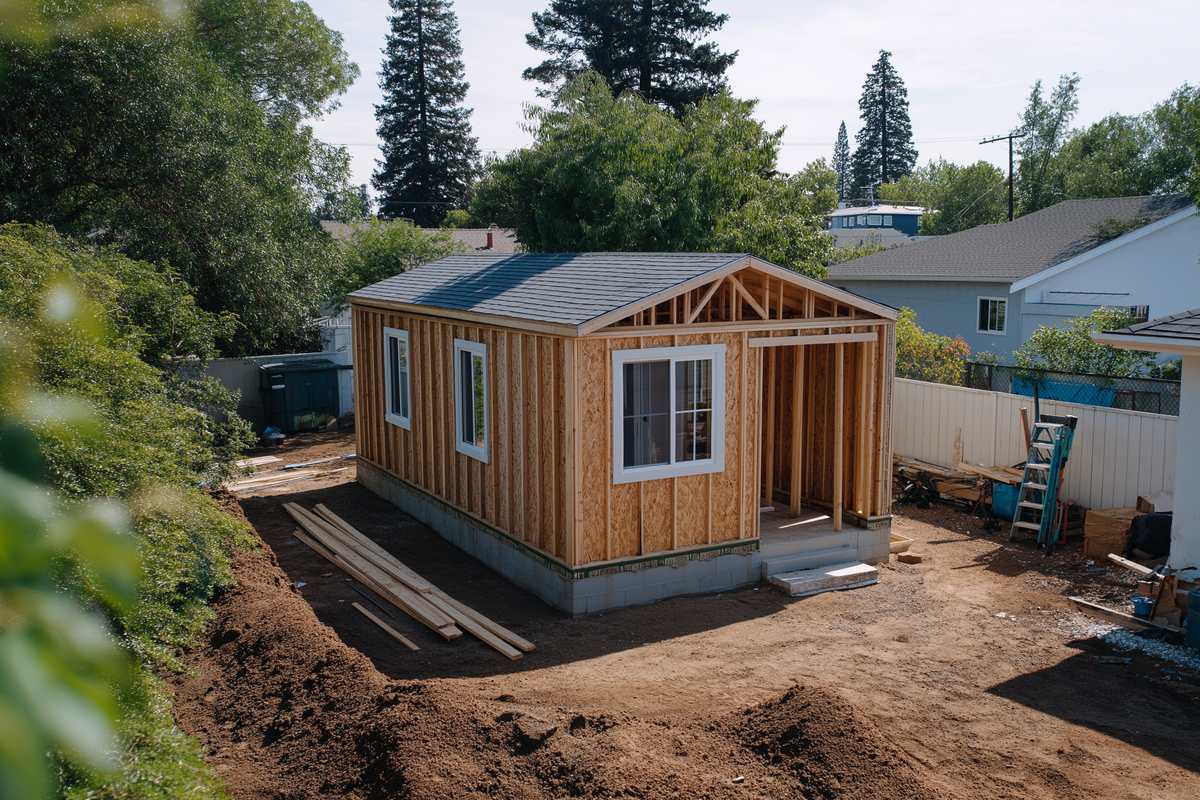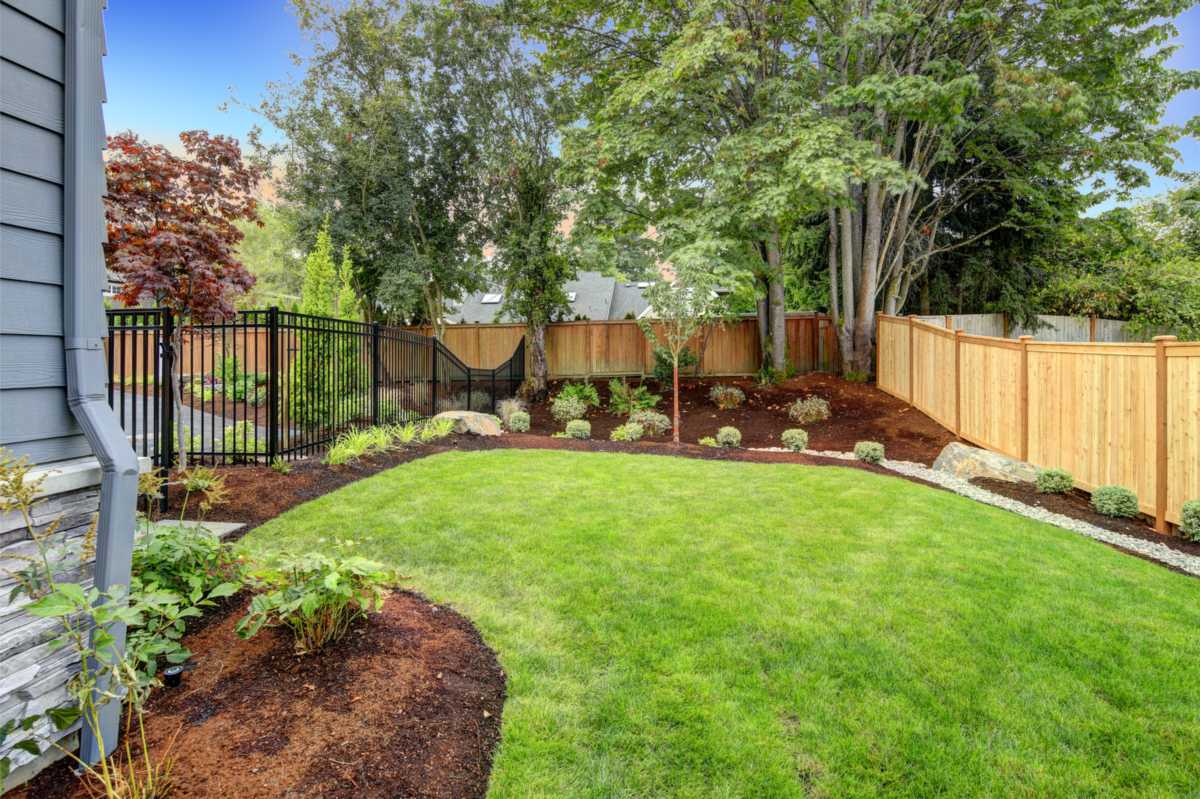
Mature trees give a backyard shade, privacy and character. When a cottage goes in nearby, those same trees face real risk from digging, heavy loads and stored materials. DADU tree protection covers the jobsite steps that keep retained trees healthy while construction moves around them.
This guide focuses on precautions during the build, from the first day of site work to final cleanup. It also explains who usually handles each step. Rules about which trees you may remove and how trees affect where a cottage can go appear in our guide to Seattle DADU trees.
Why Roots Need the Most Care
Most people picture a tree as its trunk and canopy. However, many of the roots that feed a tree sit close to the surface and spread outward. So damage often starts below ground, long before anyone sees a problem in the leaves.
Digging can cut roots, while trucks and stored materials can press the soil. Even washing tools or dumping leftover concrete near a tree can harm it. That is why protection focuses on the ground under and around the tree.
Trees also differ in how well they handle disturbance. Species, age, health and past damage all play a part. For that reason, a site plan that works for one tree may not suit another nearby.
How Seattle Defines the Protection Area
Seattle uses a tree protection area to mark the zone around a retained tree. According to SDCI’s tree protection code page, the starting point is a radius of 1 foot for every inch of trunk diameter at standard height. The rules then allow reductions and changes when they would not harm the tree’s health and stability.
A project arborist proposes the area, and SDCI verifies it. SDCI then uses that same area for two purposes. First, it helps decide whether some trees may come out. Second, it guides how crews protect retained trees during construction.
DADU Tree Protection Fencing
Fencing turns the protection area into a clear boundary on site. SDCI’s tree and vegetation protection detail lists the main requirements:
- Chain link fencing rather than orange construction fence or plywood, at least 6 feet high.
- Rigid posts driven into the ground no more than 8 feet apart.
- Early installation before demolition or ground disturbance, with the fence kept in place for the whole project.
- No activity inside the fence, which rules out storage, stockpiling, parking, excavation, dumping and washing.
The detail also says only an SDCI planner can approve changes to these requirements. In addition, SDCI’s protection placard warns that failing to follow the required measures may lead to a stop work order and civil penalties.
Planning Equipment Routes Around Trees
Equipment routes often pass close to trees on small lots. Therefore, the access plan and the tree plan need to fit together from the start. A route that crosses a protection area may need a change, or the crew may need a different method.
For example, a team might use smaller machines, move materials by hand or reroute deliveries along another side of the house. Our guide to DADU construction access covers route planning in more detail.
Soil Compaction and DADU Tree Protection
Compaction squeezes air and water out of the soil, which makes it harder for roots to grow. Repeated foot traffic, machines and stacked materials all add to that pressure. As a result, compaction outside the fence can still affect a tree’s root system.
SDCI’s detail offers a simple step. It calls for wood chip mulch at least 3 inches deep outside fenced areas to protect feeder roots. Ground mats or plywood paths can also spread loads along a work route, although the arborist should confirm what suits each site.
Grade changes need the same care. Adding fill over roots or cutting soil away near a trunk can both stress a tree. So any grading near a protection area deserves a review before work begins.
Arborist Involvement on the Jobsite
An arborist plays a role beyond the permit drawings. During work, the arborist can check fencing, review any root conflicts and advise on pruning. Meanwhile, the crew can call the arborist when digging uncovers something unexpected.
Root care follows clear steps. According to SDCI’s detail, crews should protect roots larger than 2 inches that turn up outside the fencing by digging by hand. If a cut is necessary, they should cut cleanly and keep the root moist. Also, SDCI’s registry rules say anyone paid to do reportable tree work, such as removing live roots 2 inches or larger, must appear on SDCI’s tree service provider registry.
Keeping DADU Tree Protection in Place
Protection works only if it stays up for the full project. Crews sometimes shift fences, prop gates open or let materials creep inward as space gets tight. So it helps to assign someone to check the fencing regularly.
Clear communication helps every trade. A brief talk at the start of each phase reminds crews where they cannot park, store or dig. Our guide to DADU site work costs explains how site precautions fit into planning.
After Construction Ends
Trees can show stress months after a project. Watering during dry spells, avoiding new compaction and keeping mulch in place can support recovery. Likewise, final landscaping should avoid heavy digging inside the root zone. An arborist can also advise on follow up care.
Overall, DADU tree protection depends on early planning, firm fencing, careful routes and steady oversight. With those steps, retained trees have a better chance to stay healthy beside the new cottage.

 sacdigitalmedia