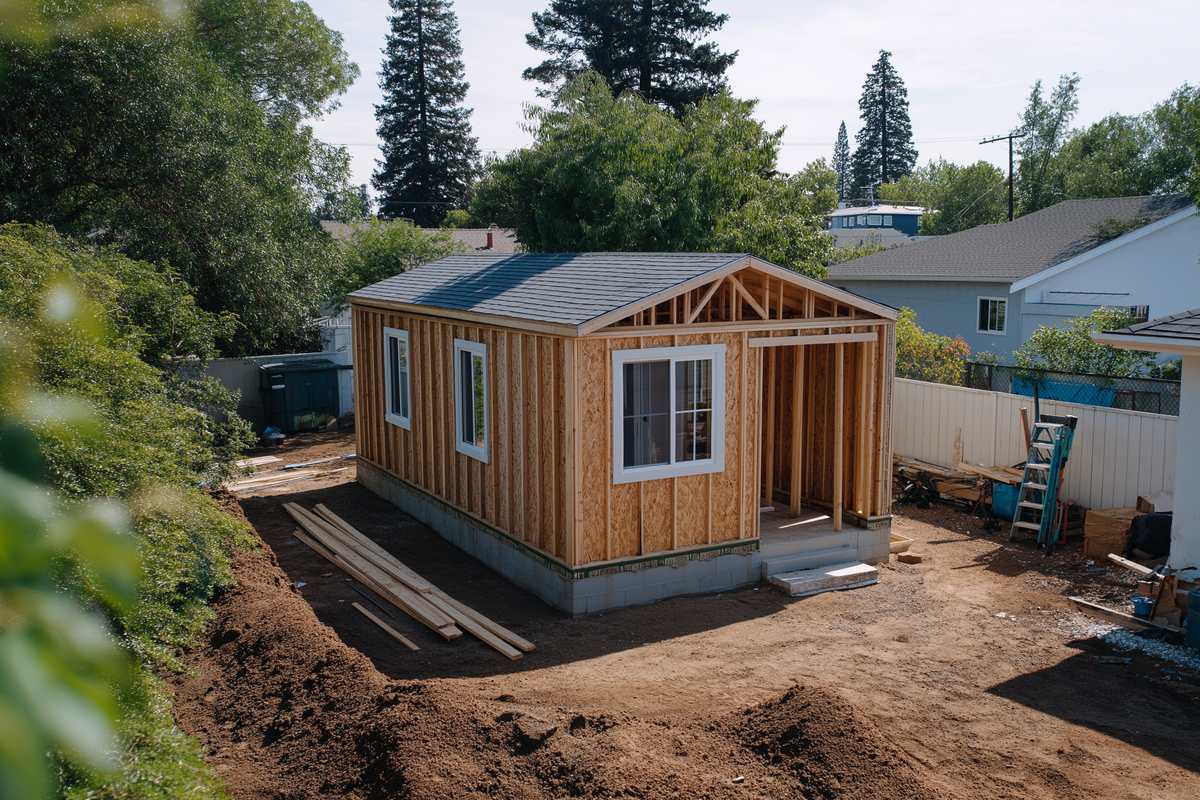
Mature trees are one of the best parts of many Seattle backyards. They can also decide where a cottage can go. Planning around Seattle DADU trees early helps you understand how the city’s tree rules may shape your layout before design gets too far.
This article focuses on property feasibility. In other words, it looks at how trees affect whether and where a cottage fits, rather than how to care for trees during construction.
Why Seattle DADU Trees Matter to Feasibility
Seattle’s Tree Protection Code limits the number, size and type of trees owners can remove from private property. It also sets replacement requirements in many cases.
For a cottage project, that means a large tree can limit the buildable area just as a setback can. Moreover, the roots of a tree often spread well beyond its trunk. As a result, the protected area around a tree can cover a large share of a small yard.
The city’s trees and codes page explains the current rules and recent updates.
Mapping Seattle DADU Trees With an Inventory
A tree inventory is a list and map of the trees that could affect your project. Typically, it notes each tree’s species, trunk size and location.
Include trees near your lot lines, not just those in the middle of your yard. Seattle’s evaluation can consider trees on neighboring lots whose protection areas reach onto your property. Likewise, street trees in the planting strip follow separate rules.
Because neighboring trees can matter, it often helps to talk with the owners next door. They may know a tree’s history, and they will likely notice any work near the shared line. Early, friendly conversations can prevent tension later.
Trunk size matters because the code sorts trees into tiers. Heritage trees sit in the top tier, while the other tiers depend mainly on trunk diameter. Each tier carries different protections.
Many owners hire a certified arborist to prepare the inventory. That way, species and trunk measurements are accurate from the start. In addition, the same arborist can later serve as the project arborist when the design moves forward.
How Tree Protection Areas Work
Every protected tree comes with a tree protection area. The code uses a trunk diameter method as the starting point for that area.
However, that starting point is not final. A project arborist can propose reductions or changes based on the tree, the site and the proposed work, as long as they do not harm the tree’s health and stability. Then the city reviews and verifies that proposal.
Once verified, the protection area serves two roles. It shapes the buildable area for design. It also sets the zone that crews must protect during construction.
When Removal May Be Possible
In general, the code restricts tree removal. Still, it includes some allowances when an owner proposes development.
In the Neighborhood Residential and Lowrise zones, the city may allow removal of certain large trees if the protection areas would otherwise prevent a project from reaching the maximum lot coverage. To decide, the city compares the buildable area with the allowable lot coverage. It also looks at all protection areas on the site together rather than one tree at a time.
Even then, the city approves only the minimum removal needed. Replacement planting or a payment in lieu may also apply. Our guide to how lot coverage works explains the coverage side of this test.
How Trees Shape Layout
Because protection areas take space, they often push a cottage toward one part of the lot. They can also influence its footprint and height.
For example, a long, narrow cottage might slip between two protected trees. Alternatively, a second story can add floor area while keeping a smaller footprint. In addition, the code offers extra height on some lots that retain qualifying trees. Our article on how height limits shape cottage design covers that option.
Utility routes deserve attention too. Trenches for water, sewer and power can cut through roots, so plan them alongside the tree review.
Canopy and Planting Requirements
Seattle aims to protect and grow its tree canopy. Accordingly, the Neighborhood Residential zones include tree planting requirements as part of development.
So even a lot with few existing trees may need new plantings. Planning for them early helps you keep space for future canopy, outdoor living and the cottage itself. You can also view the city’s mapped tree canopy on its property information map, which gives a quick sense of coverage on your block.
Getting Early Answers From the City
If your lot has large trees, early advice can save design time. The city’s arborists answer tree questions by email or through its request form.
For deeper review, you can apply for a Land Use Analysis Request focused on trees. In that review, a city arborist looks at your tree information and site plan. They then give an opinion on protection areas and potential removal.
Our post on checking whether a lot can support a cottage shows how tree questions fit with zoning, utilities and easements.
Plan With Seattle DADU Trees in Mind
Trees add beauty, shade and value to a property. At the same time, they bring rules that can shape a cottage plan from the start.
When you plan around Seattle DADU trees early, you can weigh layout options with clear eyes. Start with a good inventory, get expert input and design around what the code allows.

 sacdigitalmedia